
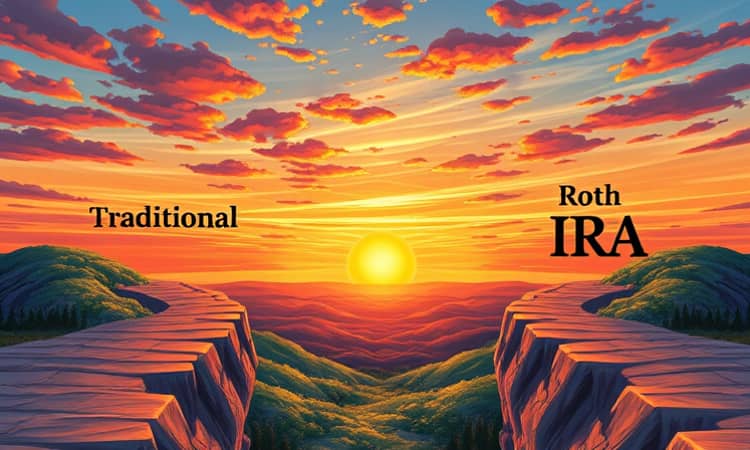
Planning for retirement can feel like navigating a vast landscape without a map. With competing priorities and ever-changing financial rules, it’s easy to feel overwhelmed. Yet by making informed choices today, you can secure your financial future and build a legacy of confidence for tomorrow.
Core Differences Between Traditional and Roth IRAs
At the heart of the decision between a Traditional IRA and a Roth IRA lies the timing of your tax benefit. A Traditional IRA offers immediate relief by allowing your contributions to be tax-deductible in the year they’re made. In contrast, a Roth IRA requires after-tax contributions but rewards you with tax-deferred growth until you withdraw in retirement. Both vehicles let your investments compound without annual tax drag, but their withdrawal rules and eligibility thresholds diverge sharply.
Understanding these distinctions equips you to align your choice with your long-term aspirations and current financial situation. Are you seeking upfront savings on your tax bill? Or do you prefer the security of tax-free income decades down the road?
Contribution Limits for 2025
To stay on track, it’s essential to recognize the annual limits imposed by the IRS. For 2025, both Traditional and Roth IRAs cap contributions at $7,000 or 100% of your earned compensation, whichever is less. If you are age 50 or older, you may contribute an extra $1,000 catch-up deposit, raising your total to $8,000.
While these figures may seem modest compared to employer-sponsored plans, IRAs play a crucial role in rounding out a diversified retirement portfolio. Even small, consistent contributions can grow substantially over decades of market participation.
Eligibility Requirements
Not everyone qualifies for every type of IRA. Your income level and filing status can determine your options and the tax advantages you enjoy.
- Traditional IRA: Anyone with earned income can contribute regardless of how much you earn. However, the ability to deduct contributions on your tax return phases out if you or your spouse participates in a workplace retirement plan and your income exceeds certain levels.
- Roth IRA: Income restrictions apply. Single filers with Modified Adjusted Gross Income (MAGI) below $150,000 can contribute the full amount, with a phase-out between $150,000 and $165,000. Married couples filing jointly have full access up to a MAGI of $236,000, phasing out by $246,000. Above these thresholds, contributions are disallowed.
Tax Treatment and Withdrawal Rules
When you retire, the source of your distributions can greatly influence your tax liability and cash flow.
Choosing the Right IRA for Your Future
Deciding between a Traditional and Roth IRA involves evaluating where you stand today and where you expect to be tomorrow. While immediate tax relief can free up cash for other investments, tax-free withdrawals decades from now can offer peace of mind.
Consider the following factors carefully:
- Your anticipated tax bracket in retirement versus today
- Your need for flexible withdrawals or estate planning advantages
- Your time horizon until retirement and ability to weather market volatility
- maximize your tax diversification strategy by holding both account types
For some savers, a hybrid approach—making Roth contributions in lower-income years and Traditional contributions when earnings peak—provides a balanced tax profile.
Beyond the Basics: Conversions, Rollovers, and More
Even if you already have a Traditional IRA, you can convert funds to a Roth IRA at any time. While you’ll owe taxes on the converted amount, a strategic conversion can lock in today’s tax rates and set the stage for take advantage of rollover opportunities and future tax-free growth.
Additional considerations include:
- Tax credits like the Retirement Savings Contributions Credit for eligible savers
- Rules governing rollovers from 401(k) or 403(b) plans to IRAs
- Wide selection of mutual funds, ETFs, and individual securities available within IRAs
- Recent legislative shifts that may adjust contribution caps or age thresholds
Staying informed about policy changes helps you adapt and maintain momentum toward your retirement goals.
Real-Life Scenarios and Strategies
Imagine Sarah, a 45-year-old manager who expects her income to rise steadily over the next decade. She opts for traditional contributions now to lower her tax bill and plans a phased Roth conversion during mid-career dips.
By contrast, John, a 30-year-old freelancer with fluctuating income, channels every dollar he can into a Roth IRA while in a lower tax bracket. He benefits from planned for decades of growth and the flexibility to withdraw contributions if unexpected expenses arise.
These case studies illustrate that the “right” IRA depends on individual circumstances, risk tolerance, and vision for the future.
Ultimately, your retirement journey deserves as much intentionality as your daily routine. By weighing tax implications, personal goals, and market realities, you can craft an IRA strategy that resonates with your values and delivers lasting peace of mind.
Whether you choose the immediate relief of a Traditional IRA or the long-term certainty of a Roth, taking action today will help pave the way for lasting security and ensure you step confidently into the next chapter of your life.
References
- https://www.fidelity.com/retirement-ira/ira-comparison
- https://investor.vanguard.com/investor-resources-education/iras/roth-vs-traditional-ira
- https://www.schwab.com/ira/ira-calculators/roth-vs-traditional
- https://www.capitalgroup.com/individual/planning/retirement-planning/ira-comparison-table.html
- https://www.prudential.com/financial-education/traditional-vs-roth-ira
- https://www.voya.com/blog/workplace-retirement-plan-and-ira-contribution-limit-changes-2025-what-to-know-now
- https://www.investopedia.com/retirement/roth-vs-traditional-ira-which-is-right-for-you/
- https://www.irs.gov/retirement-plans/traditional-and-roth-iras