
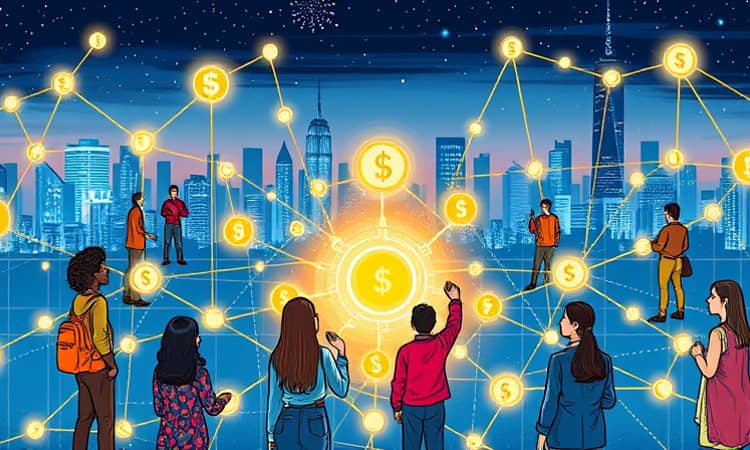
In recent years, the financial landscape has been reshaped by the rise of online platforms that connect borrowers and lenders directly. At the heart of this transformation lies peer-to-peer (P2P) lending, an innovative model offering alternatives to traditional banking. As interest in P2P lending soars, it’s vital to understand both its opportunities and pitfalls.
Across the globe, the P2P lending market is experiencing unprecedented growth. With a current size of USD 176.5 billion in 2025 and projections reaching USD 1,380.80 billion by 2034, the sector promises vast potential. Yet, with great promise comes important questions about risk, regulation, and real-world performance.
What Is Peer-to-Peer Lending?
Peer-to-peer lending is a financial practice where individuals who need loans connect with investors ready to provide capital. Operated through online platforms, this model cuts out traditional banks as intermediaries. Instead, borrowers list loan requests, and investors choose to fund them based on credit data, risk assessments, and personal goals.
At its core, P2P lending democratizes finance by letting everyday people access capital or earn returns. Whether you’re funding a small business expansion, financing a home renovation, or diversifying your portfolio, P2P platforms offer compelling possibilities. However, it’s essential to recognize that this space still navigates evolving regulations and technology-driven challenges.
Key Advantages for Borrowers
For those seeking funds, P2P lending offers a range of benefits over traditional bank loans:
- Lower interest rates compared to traditional banks, often saving thousands of dollars over a loan’s lifetime.
- More flexible and customizable loan terms, allowing borrowers to choose repayment timelines and rate structures that fit their budgets.
- Simpler, faster approval processes online, reducing wait times from weeks to days or even hours.
- Minimal or no collateral requirements, making loans accessible to those without significant assets.
- Personalized evaluation metrics beyond credit score, including employment history, references, and income streams.
These advantages mean that entrepreneurs, students, and homeowners with imperfect credit can still secure necessary financing. The streamlined application process, combined with transparent fee structures, creates a borrower-friendly environment that traditional banks often struggle to match.
Attractive Opportunities for Lenders
Investors in P2P lending stand to benefit from returns that can outpace conventional savings or bond yields. Typical interest rates for secured loans range from 8% to 25% per annum, depending on borrower risk profiles.
- Higher potential returns than many fixed-income assets, offering a way to grow wealth.
- Built-in diversification across loan portfolios, mitigating impact of individual defaults.
- Technology-driven risk assessment tools, providing data insights and automated decisions.
Through fractional lending—where investors fund small portions of multiple loans—one can spread exposure and minimize the impact of any single borrower’s default. Platforms often provide detailed dashboards, credit reports, and historical performance data to guide investment choices.
Risks and Challenges to Consider
Despite its allure, P2P lending carries inherent risks. Understanding these challenges is crucial for both borrowers and investors.
Regulatory uncertainty remains a major concern. As governments worldwide adapt to digital financial services, evolving rules can impact platform operations, fee structures, and investor protections. Platforms operating across borders face the complexity of dual compliance requirements, which can slow innovation or increase costs.
Default rates are another key challenge. While platforms employ rigorous credit assessments, economic downturns or individual financial crises can lead to missed payments. Investors must remain comfortable with the possibility of partial or complete losses on certain loans.
Liquidity is also limited. Unlike stocks or bonds traded on public exchanges, peer-to-peer loans may be held until maturity. Some platforms offer secondary markets for loan trading, but these can be thinly traded and incur additional fees.
Market Growth and Future Trends
The P2P lending industry’s growth is fueled by several driving factors:
- Technological advancements in AI and data analytics, improving risk assessments and investor dashboards.
- Increasing demand from small and medium-sized enterprises seeking fast, accessible financing.
- Rising need for education and healthcare financing, sectors traditionally underserved by conventional banks.
- Collaborations between P2P platforms and banks, enhancing credibility and broadening product offerings.
Emerging trends point to real estate crowdfunding, impact investing, and integration of Web 3.0 features like tokenized loans. These innovations promise to deepen market reach and enhance transparency.
How to Get Started Safely
If you’re intrigued by P2P lending, whether as a borrower or lender, here are practical steps to begin:
- Research reputable platforms with strong track records and transparent fee disclosures.
- Compare interest rates, term lengths, and default statistics to find the right match.
- Start small to build familiarity with platform mechanics and risk profiles.
- Diversify investments across multiple loans or funding requests to spread risk.
- Monitor your portfolio regularly, reinvesting returns strategically.
Education is paramount. Attend webinars, read platform guides, and engage with user communities to learn from experienced participants. By taking an informed, step-by-step approach, you can harness the power of peer-to-peer lending while managing potential downsides.
Conclusion: Balancing Innovation with Prudence
Peer-to-peer lending represents a groundbreaking shift in how capital flows between individuals. Its rapid market growth—driven by technology, regulatory support, and unmet financing needs—underscores its potential to redefine personal and small-business finance.
Yet, excitement must be tempered by caution. Regulatory landscapes can shift, default rates may rise during economic stress, and liquidity can be limited. By blending strategic portfolio diversification with thorough due diligence and an understanding of platform mechanics, both borrowers and investors can navigate this evolving space successfully.
Ultimately, peer-to-peer lending stands as a testament to human ingenuity and the democratization of finance. When approached with respect for its complexities and an eye toward long-term goals, it offers a powerful tool for empowerment, growth, and shared prosperity.
References
- https://www.precedenceresearch.com/peer-to-peer-lending-market
- https://www.skyquestt.com/report/peer-to-peer-lending-market
- https://www.globalbankingandfinance.com/-peer-to-peer-lending-trends-2025
- https://www.imarcgroup.com/united-states-peer-to-peer-lending-platforms-market
- https://www.thebusinessresearchcompany.com/market-insights/peertopeer-p2p-lending-market-overview-2025
- https://www.fundingo.com/is-the-coming-wave-of-peer-to-peer-lending-disrupting-the-traditional-lending-model/
- https://www.british-business-bank.co.uk/business-guidance/guidance-articles/finance/peer-to-peer-lending
- https://www.absrbd.com/post/peer-to-peer-lending-statistics